Many men discover they have enlarged veins in their scrotum during routine checkups or when investigating fertility concerns. The swelling causes discomfort, the pain interferes with daily activities, and the worry about infertility creates stress.
Traditional surgical approaches often mean hospital stays, general anesthesia, and weeks of recovery. But what if there’s a better way? Through varicocele embolization, interventional radiologists offer a solution that requires no surgical cuts, causes minimal discomfort, and gets you back to normal life quickly.
What Is Varicocele Embolization
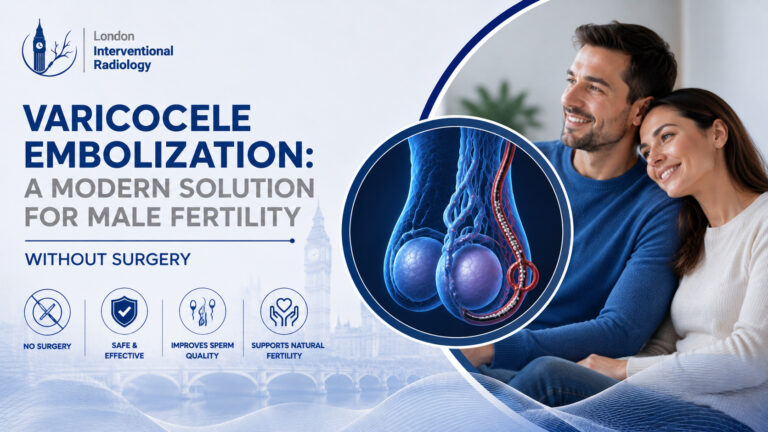
Varicocele embolization represents a modern approach to treating abnormal blood flow in the testicular veins. When veins in the spermatic cord become enlarged, they create a condition called varicocele that affects approximately 15% of all men and up to 40% of those experiencing infertility.
During this minimally invasive procedure, an interventional radiologist inserts a thin catheter through a small puncture in your groin or neck vein. Using X-ray guidance, they navigate to the problematic vein and block it with tiny coils or liquid glue. The entire process redirects blood flow through healthier veins, eliminating the swelling and its effects on sperm production.
The procedure typically takes 45 to 90 minutes and requires only local anesthesia. You remain awake and comfortable throughout, with most patients going home the same day. Medical imaging helps the doctor see exactly where to place the blocking materials, ensuring precision without any external cuts on your scrotum.
Is Embolization Good for Varicocele?
Yes, embolization has proven highly effective for treating varicoceles. Studies show that this technique successfully blocks the enlarged vein in 90-95% of cases. The benefits extend beyond just fixing the anatomical problem.
Men who undergo embolization often experience improved sperm quality within three to six months. Those dealing with testicular pain report significant relief, with discomfort typically decreasing within weeks. The minimally invasive nature means less trauma to surrounding tissues compared to traditional surgery.
Interventional radiologists have refined this technique over decades, making it a reliable choice for men concerned about fertility and comfort. The procedure avoids risks associated with general anesthesia and leaves no visible scars, addressing both medical and cosmetic concerns.
Varicocele Embolization Success Rate
The success rates for varicocele embolization speak for themselves. Clinical data shows technical success exceeding 95%, meaning the vein gets properly blocked in nearly all attempts. More importantly, the clinical outcomes demonstrate real benefits for patients.
Regarding fertility improvements, research indicates that 50-70% of men see enhanced sperm parameters after the procedure. Pregnancy rates among couples where the male partner underwent embolization range from 30-50% within the first year, comparable to surgical alternatives.
Pain relief occurs in approximately 80-90% of patients who had testicular discomfort before treatment. The Bähren classification of left varicoceles helps doctors predict outcomes, with certain anatomical patterns responding better to embolization than others.
Varicocele Embolization Procedure
After you arrive, the medical team preps a small area on your groin or neck. Local anesthesia numbs the insertion site—you’ll feel pressure but not pain.
The interventional radiologist guides a catheter through your vein system using fluoroscopy (live X-ray imaging). They perform a venogram to map the veins and check for collateral vessels.
Once they locate the target vein, they deploy coils or inject liquid embolic material to block blood flow. Radiation exposure remains minimal, similar to a few chest X-rays. After removing the catheter, you rest briefly before going home.
Is Varicocele Embolization Permanent
Varicocele embolization provides long-lasting results. The coils or glue permanently block the treated vein, and your body naturally reroutes circulation through healthy veins.
Recurrence rates range from 5-15%, typically when collateral veins develop or not all problematic veins were initially identified. Regular follow-up helps detect any returning symptoms early.
Varicocele Embolization Coil
The coil used is a tiny device made of platinum or stainless steel. When released from the catheter, it acts as a barrier. It promotes clotting in the bad vein, effectively shutting it down. Some procedures use a combination of coils and liquid agents to ensure the vein is completely sealed, preventing any collateral flow that could cause a recurrence.
Varicocele Embolization vs Surgery
Surgical varicocelectomy requires incisions in your abdomen or groin, cutting through tissue layers under general or regional anesthesia.
Embolization offers distinct advantages: no surgical cuts, faster recovery, lower infection risk, and treating both sides in one session. You avoid general anesthesia complications and return to activities within days.
Success rates remain comparable between both approaches. The choice depends on patient preference, local expertise, and anatomical considerations.
Varicocele Embolization Side Effects
Common side effects include temporary discomfort at the insertion site, mild nausea from contrast material, and brief testicular pain or swelling.
Serious complications remain rare but can include allergic reactions to contrast dye, blood vessel injury, coil migration, infection, or hematoma in the groin.
Testicular atrophy occurs extremely rarely with embolization compared to surgical approaches. Most side effects resolve within a week.
Varicocele Embolization Recovery
You’ll rest at the facility for a few hours after the procedure for monitoring. Expect to return home the same day with instructions to rest for 24-48 hours.
Avoid strenuous activities and heavy lifting for one week. Most men return to desk jobs within 2-3 days and resume full activities within a week.
Mild discomfort is normal and responds well to over-the-counter pain medication. Apply ice packs to reduce swelling. Follow-up appointments typically occur at three and six months to assess results.
Frequently Asked Questions
How long does varicocele embolization last?
The effects of varicocele embolization are intended to be permanent. The coils or glue permanently block the treated vein, with success lasting a lifetime in 85-95% of cases. Recurrences, when they occur, typically happen within the first year.
What are the disadvantages of embolization?
The main disadvantages include a slightly higher recurrence rate compared to some surgical techniques, the need for specialized interventional radiologists, limited availability in some regions, and the small risk of coil migration. Additionally, not all anatomical variations are suitable for this approach.
Can varicocele embolization cause infertility?
No, varicocele embolization aims to improve fertility rather than harm it. The procedure specifically targets problematic veins while preserving the testicular artery and surrounding structures. Studies show improved sperm parameters in most patients, with no evidence that the procedure damages sperm production.
Is embolization better than surgery?
Embolization offers advantages like no surgical cuts, faster recovery, and the ability to treat both sides simultaneously. Surgery provides direct visualization of veins. Success rates for both methods are similar, making neither universally “better”—the choice depends on individual circumstances and preferences.
Can varicocele embolization fail? 🔍
Yes, embolization can fail in 5-10% of cases, usually due to incomplete vein blockage, presence of collateral vessels that weren’t treated, or technical difficulties during the procedure. Failed embolizations can often be repeated or followed by surgical repair.
Can coils move after embolization?
Coil migration is rare, occurring in less than 2% of cases, typically within the first few days after placement. Once the coil becomes incorporated into the vein wall and surrounded by clotted blood, movement becomes extremely unlikely. Proper coil sizing and placement technique minimize this risk.
Can I become a father after varicocele embolization?
Yes, many men achieve fatherhood following varicocele embolization. Studies show that 30-50% of couples conceive naturally within the first year after the procedure. Sperm quality improvements continue for several months post-treatment, with maximum benefits typically seen at 3-6 months.
Can varicocele come back after embolization?
Recurrence occurs in 5-15% of patients, usually because new collateral veins develop or not all problematic veins were initially identified. Risk factors for recurrence include the presence of multiple feeding veins and certain anatomical patterns. Recurrences can often be treated with repeat embolization.
Can varicocele return after embolization?
Yes, varicoceles can return, though it’s relatively uncommon. When recurrence happens, it typically results from the development of new venous pathways or incomplete initial treatment. Regular follow-up helps detect recurrences early, when they’re easiest to address with additional intervention.
What is the most successful varicocele surgery?
Microsurgical subinguinal varicocelectomy traditionally shows the lowest recurrence rates (1-5%) among surgical options, but requires specialized surgical expertise. However, embolization offers comparable overall success with less invasive access and faster recovery, making success rates similar when considering both technical outcomes and patient satisfaction.
Take Control of Your Health Today 💪
Dealing with varicocele doesn’t mean accepting pain, discomfort, or fertility concerns. Varicocele embolization provides an effective alternative to traditional surgery, combining high success rates with minimal downtime and no surgical scars.
Dr. Samir Abdel Ghaffar, consultant in interventional radiology, brings extensive experience in minimally invasive treatments. His expertise ensures you receive personalized care using the latest techniques, whether addressing fertility concerns, relieving testicular pain, or both.
Don’t let varicocele affect your quality of life or family planning goals. Modern interventional radiology offers solutions that work with your body’s natural healing while minimizing disruption to your daily routine.
Contact Dr. Samir Abdel Ghaffar
London, UK 🇬🇧
Clinic: 00442081442266
WhatsApp: 00447377790644
Egypt 🇪🇬
Cairo Booking: +201000881336
WhatsApp: +201000881336
Schedule your consultation today to learn how varicocele embolization can help you achieve your health goals.